
Season end on Bee Creek arrived with heavy rains and rising water levels. Water temperature has dropped slightly since the summer months and remains at around nine to ten degrees, as we recorded six trout… More

Monitoring Cutthroat Trout in Bee Creek, Victoria, Canada
Season end on Bee Creek arrived with heavy rains and rising water levels. Water temperature has dropped slightly since the summer months and remains at around nine to ten degrees, as we recorded six trout… More

With the approaching fall and the ending of the Bee Creek monitoring season, we recorded ten cutthroat trout with half of those found in site 6, which is likely the deepest pool on Bee Creek.… More

Salmon in the City refers to events celebrating salmon runs and wildlife conservation in urban areas, such as the annual “Salmon in the City” celebration in Surrey, BC, and viewing opportunities in other cities like Coquitlam… More
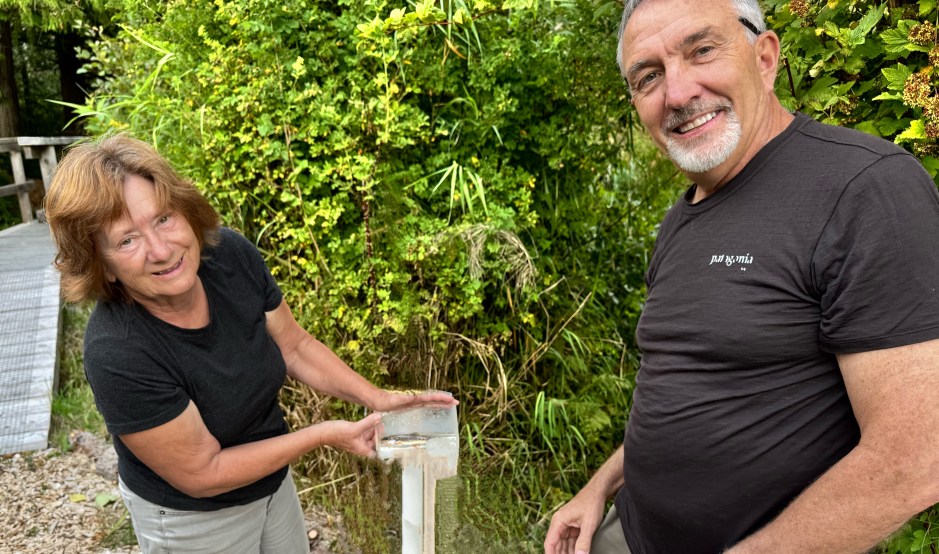
The Summer end brought cooling weather to Bee Creek.
The creek shows a strong water flow with consistant temperatures below 14 degrees even after hot weather during August. In addition, there appears to be a drop in water level most apparent in the pools located on site 1, and 7. Despite these issues, there appears to creek appears healthy with good quantities of invertebrates .
Jamie and I were joined by Judy, a good friend and neighbour, well experienced with ELSI due to her volunteer work with Jason on the European green crab trapping. Some similarities exist between crab and trout trapping, in that in both cases, traps are baited and left to soak for a day.
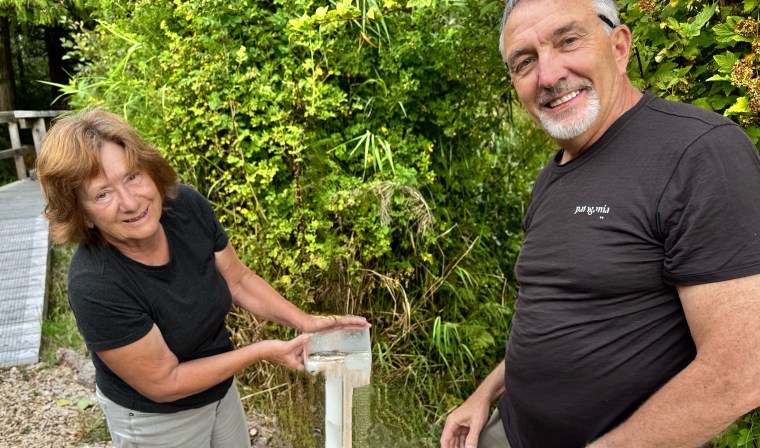
We recorded a healthy 185mm cutthroat in site 1, likely readying its return to the lagoon shortly and beginning its next stage. Based on research, juvenile trout remain in freshwater creeks for about two years.
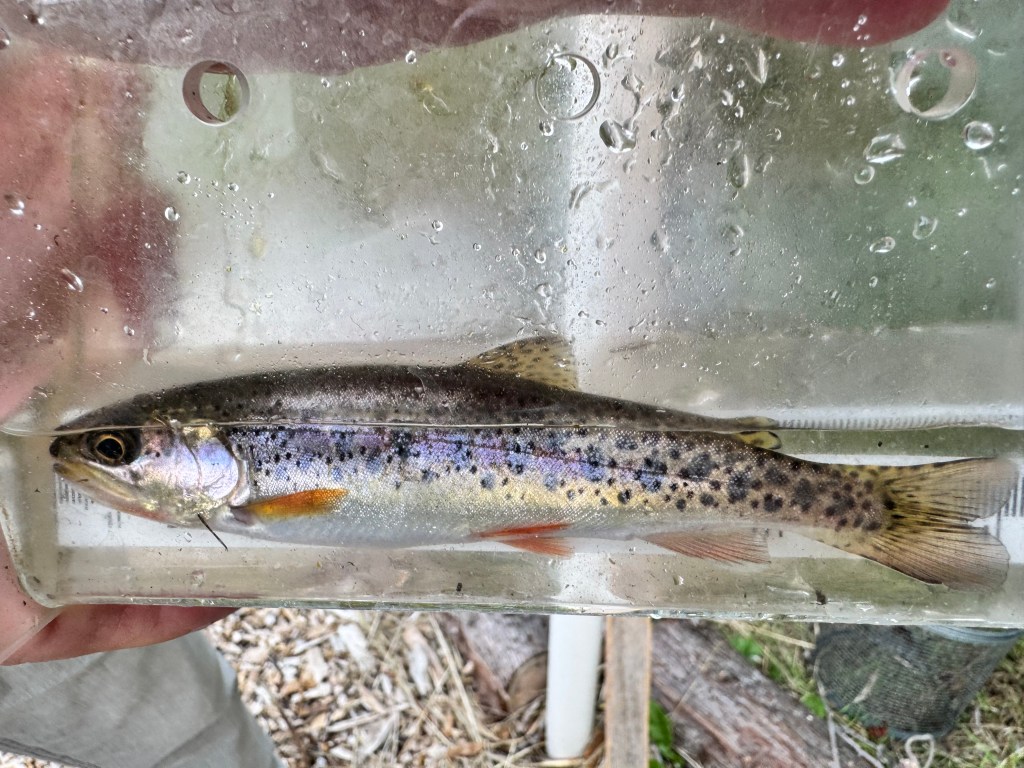

We experimented with two alternatives for measuring the trout. The cutthroat on the left was measured using a stream keepers viewer which has a small tape measure at the bottom of the device. We need to keep the trout secure with our hands on top as opposed to the 185mm trout on the right which was measured in a ziplock bag with a ruler placed in the bottom.

The end of July brings us to the half way mark in the monitoring season at Bee Creek.
We were joined by James, a neighbour and friend who will become a regular ELSI volunteer and team member. Kelly-Anne and I showed James some of the changes to the creek sites since last year, most significant of which was the blockage at site nine with multiple trees which fell down last winter. Despite this and the clear drop in the water level there still remains a good sized pool where four trout were recorded.

The trout were well dispersed over the length of the creek this month and we monitored trout at each site. Site two which has a deepish run held five healthy Cutthroat.
Sculpins continue to thrive in the lower section of the creek. According to iNaturalist the smoothhead sculpin (Artedius lateralis) is not considered an invasive species. It is a native fish found along the northern Pacific coast, ranging from Russia and the Bering Sea to Baja California.

With half the season over we are seeing a moderate yet consistant average drop in the numbers of trout recorded.

By the end of June the warm weather finally arrived at Bee Creek. Although the number of trout recorded remain low, the creek looks healthy with temperatures around 13 degrees Celcius. In addition, a diversity of insects were visible.
Access to the sites in some cases remains a challenge, especially site 7 which was heavily overgrown with blackberries, holly, salmonberries and trees which fell over the winter.

The site is almost invisible and we had to cut away branches in order to set traps. Fortunately there are still trout in evidence including a small 50 milimetre juvenile which was measured.
We were joined by Duncan this month who is studying Biology and is set to graduate next year. He recently was involved with a multi day trapping effort by ELSI to capture Asian Green Crab in the Esquimalt Lagoon and his experience was very helpful in identifying Bee Creek invertebrates.
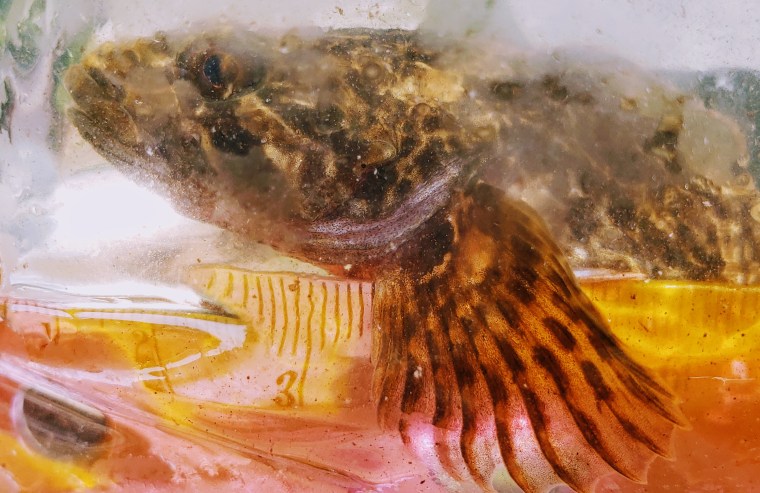
This Smoothhead Sculpin was retrieved and released at site 4.

Artedius lateralis, also known as the smoothhead sculpin or round-nosed sculpin, [2] is a species of marine ray-finned fish belonging to the family Cottidae (Wikipedia)

An unusually cool spring opened the season for 2025. The traps brought in 13 juvenile trout, all healthy and ranging between 80 to 140 milimetres in length. The majority of trout were 100 mmls in length suggesting mature trout spawned in December.
The larger of this month’s recordings show that the larger fish were found upstream, perhaps a kilometre from the mouth.

Site seven, experienced the biggest change over the winter with two large trees falling over the creek. The foliage once cut back to allow access to the creek, showed a more shallow pool, possibly due to a blockage further upstream. Despite the depth and overgrowth we recorded five healthy trout there.
Other sites were considerably overgrown since last year but the stream overall shows a healthy flow and consistent temperature.
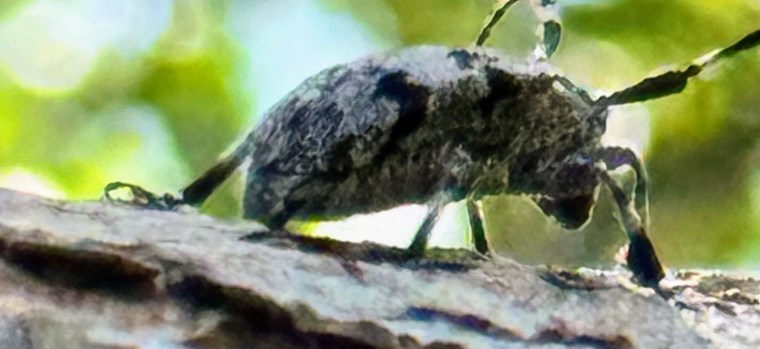
We usually find interesting plant and insect life whie monitoring and this year is no exception.
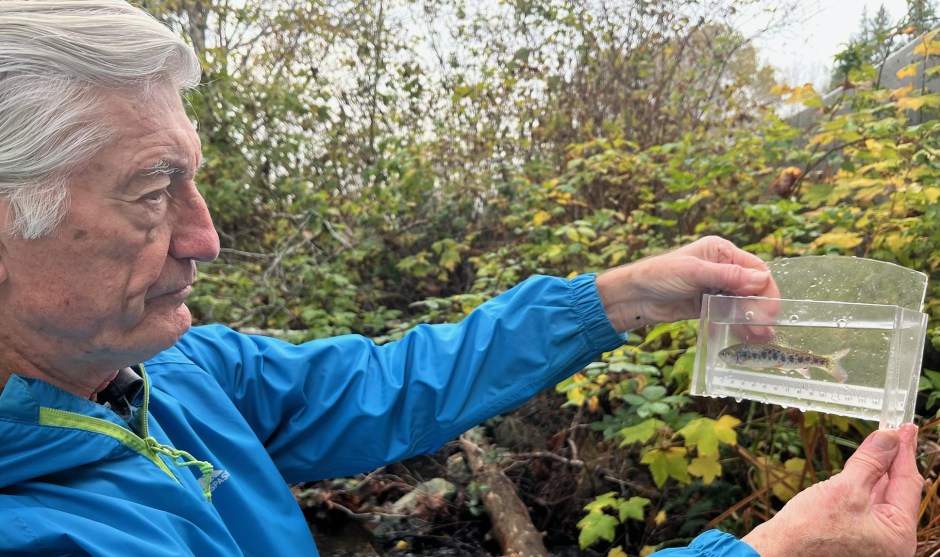
The last monitoring session of the 2024 season was accompanied with wet cool weather. Water temperature has dropped to just under 10 degrees showing the consistency of the creek throughout the year.
Despite the drop in numbers, trout measured were healthy and ranged from 55 to 135 millimetres. We recorded two large sculpins from site two; it appears they are attracted to the oysters and smoked mussels used as bait in the bee traps.

This month we have started using the traditional streamkeeper fish viewer again for observing and measuring the cutthroat. The viewer makes it easy to photograph and measure the fork length of the trout which is from the tip of the nose to the inside length of the tail fork.

This example is 13 centimetres or 130 millimetres in length. Other typical cutthroat indicators are the spotted body and the orange flash just under the jaw.

The beginning of fall brought a healthy count of 25 cutthroat trout in Bee Creek. Starting close to the mouth with only one or two fish, ten fish were recorded in site three, ranging in size from 50 to 125 millimetres.

It was noted that the majority of trout recorded were over two years old and it was the second month in a row that confirmed that the cutthroat in Bee Creek were active.
Of particular interest was site seven, which is a large deep pool and which has not, to date attracted many trout recorded four healthy fish. The pool has dropped in depth for several months leading to concern that there may be either a blockage of the creek upstream of the site or due to dry weather this summer, a drop in the amount of ground water in the aquifers feeding the creek.
Water temperature in the creek has dropped to between 11 and 12 degrees, a mere two dgrees since the summer months.
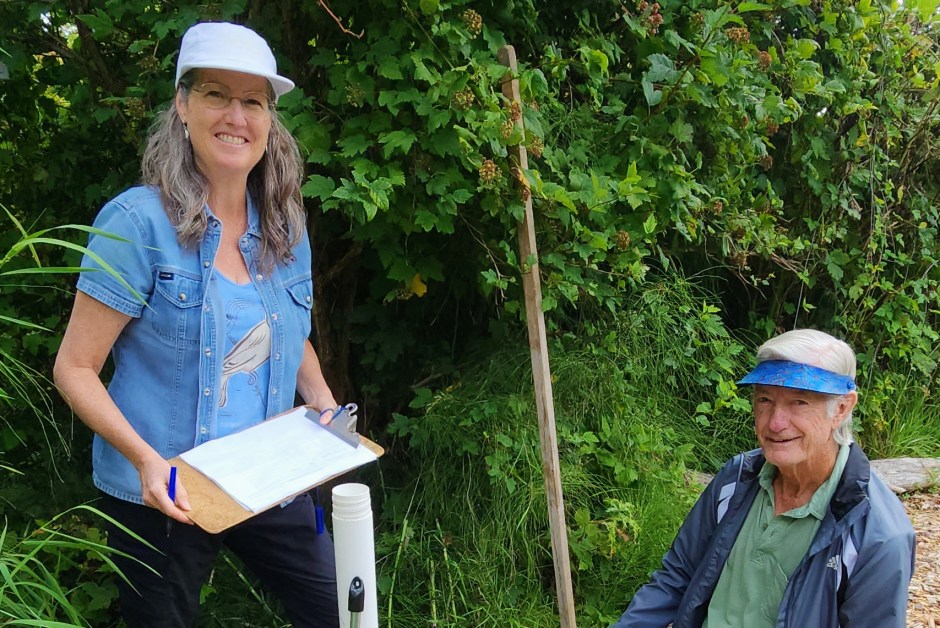
By the end of August, the number of cutthroat measured returned to normal with 24 healthy fish recorded. Fork lengths ranged from 40 to the largest measuring 160 millimetres.
Trout were recorded at each of the seven sites along the creek contrasted with the last three months of monitoring. Water temperature was also consistent at 14 degrees.
The caddis flies have finally moved on to the adult stage and the fresh water shrimp were recorded through the creek. Although it is not easy to measure the shrimp is was noticed that they vary in size as well, prompting us to find ways to discover more about these macro invertabrates.
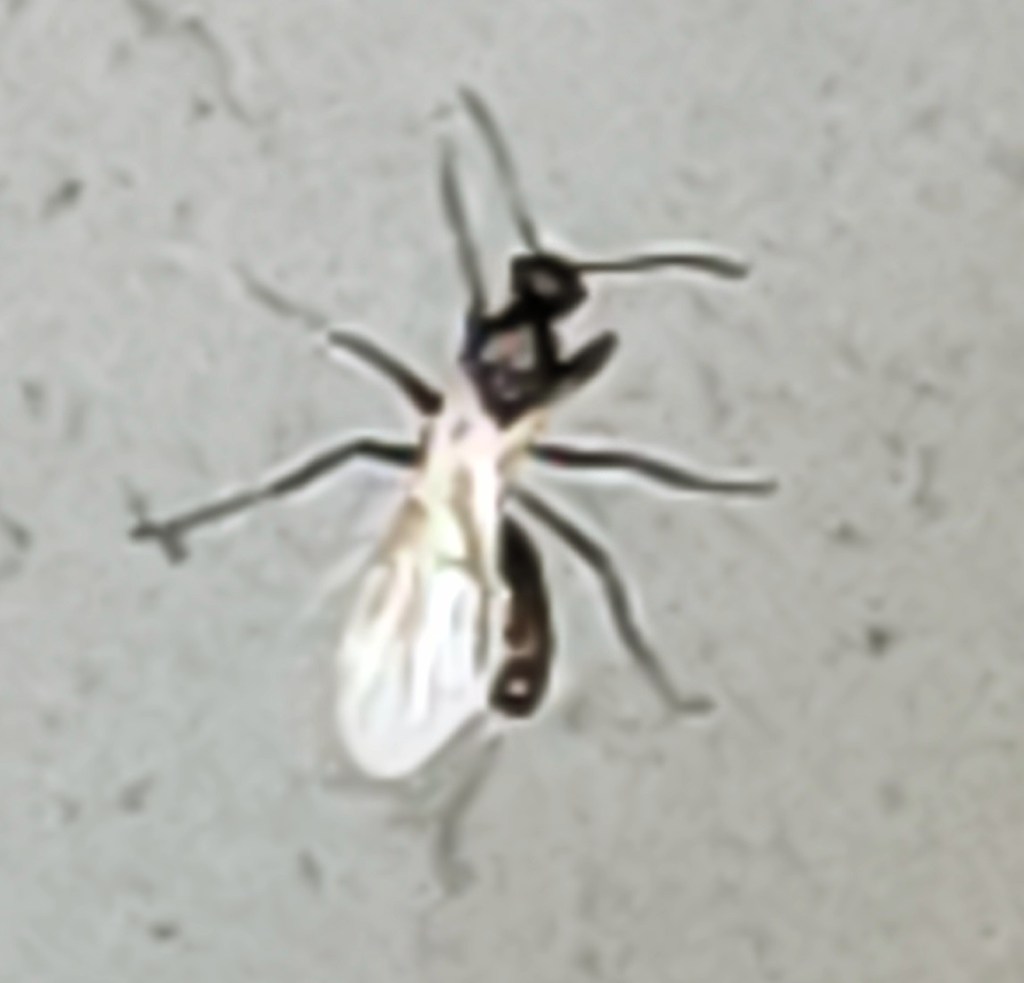

New discoveries this month include a flying ant which floats on the surface of the water and what looks like a leech which was caught up in the gee traps. Both are considered food for Cutthroat.
Sculpins can feed on small juvenile cutthroat, but they are not commonly found beyond site 1, close to the mouth of Bee Creek. For the first time a sculpin was recorded on site four, roughly half way up the creek towards the source.
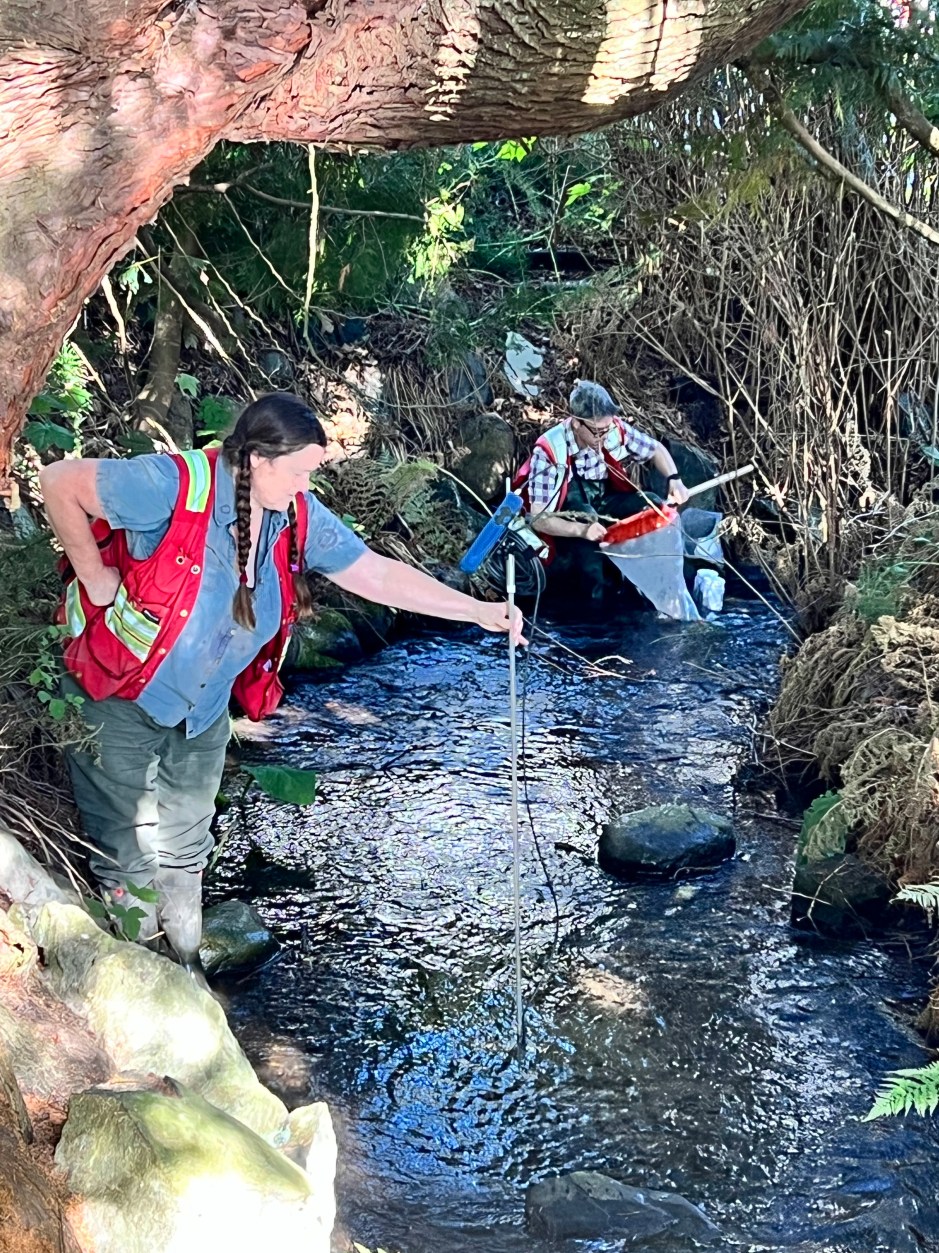
Bee Creek is monitored by both volunteers of the Esquimalt Lagoon Stewardship Initiative (ELSI) and the Capital Regional District (CRD). This week we were visited by Sara, Barri and Dean (CRD) as part of the water quality research program.
The one hour visit completed an extensive analysis of Bee Creek and we learned how water velocity, temperature, turbidity were measured. In addition, careful measurements of the creek depth and width were taken plus sampling of pebble size, sand and vegetation were taken.


This was the third visit for Sara, who previously had taken water samples to test.
Using a sample length of the creek, which contained ripples, Dean a used kick net to collect macro invertebrates. The net was moved carefully along the bed of the creek while collecting vegetation, mud and a variety of insects such as flies, larvae and shrimp. The bottom of the net contained a collection tube from which samples were taken.
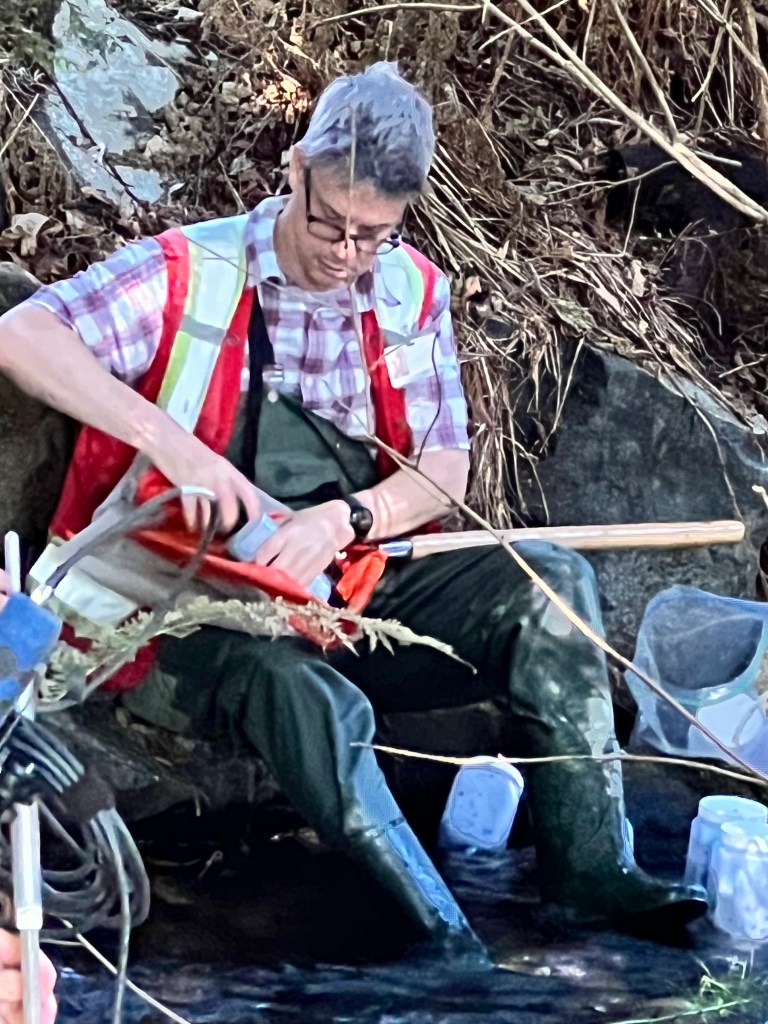


All samples were sent to CRD laboratories for examination, analysis and reporting. See the last report completed by CRD in 2008.

By the end of July, Bee Creek has been heavily overgrown with blackberries, horse tails and weeds making access to the monitoring sites a little challenge in some cases. The number of trout recorded continued to drop although the fish measured were lively , of good colour and appeared to be eating well.

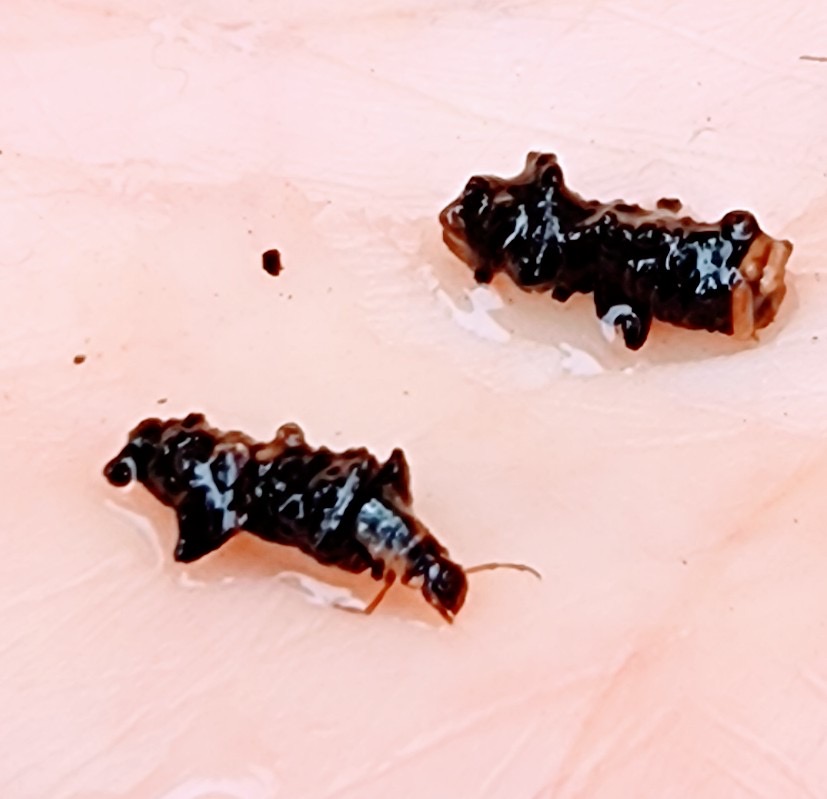
The creek holds a variety of food for the cutthroat including freshwater shrimp and caddisfly casings which are fewer indicating that these insects have moved on to the next stage. A new insect to us, (banner photo) looks like a caterpillar, but is likely to be freshwater invertebrate, yet to identified.
The pools in the creek are somewhat smaller and lower than last year with recordings concentrated towards the mouth and more upstream. Water quality testing by CRD will begin in August which may provide solutions to the question of trout numbers.
The end of June brought us closer to the mid way of the monitoring season. Trout numbers were low with only 8 fish being recorded. The fish seemed to be pooling close to the mouth of Bee Creek and further upstream where there are deeper pools, suggesting the fish are avoiding the shallower, overgrown portions of the stream. Water temperatures were consistent throughout the creek at around 13 degrees.
Sculpins were found as usual close to the mouth of Bee Creek. Although they prey on the same insects as cutthroat there is no evidence that there is a lack of food. On the contrary, freshwater shrimp were plentiful.
Caddisflies casings were also found in the Gee traps although it is likely that they will advance to the adult stage next month emerging from the pupae.

 Bee Creek Cutthroat